1
Strong dependence on existing tools
Handwritten notes and LINE messages are deeply embedded in daily workflow.
I led end-to-end research and design, helping a startup take a B2B SaaS product from concept to MVP - securing NT$2M+ in funding and onboarding 40+ vendors across 3 industries.
Conducted field research across traditional markets in Keelung, Taichung, and Taipei — interviewing egg, tofu, and fruit vendors to observe their actual daily workflows in context.
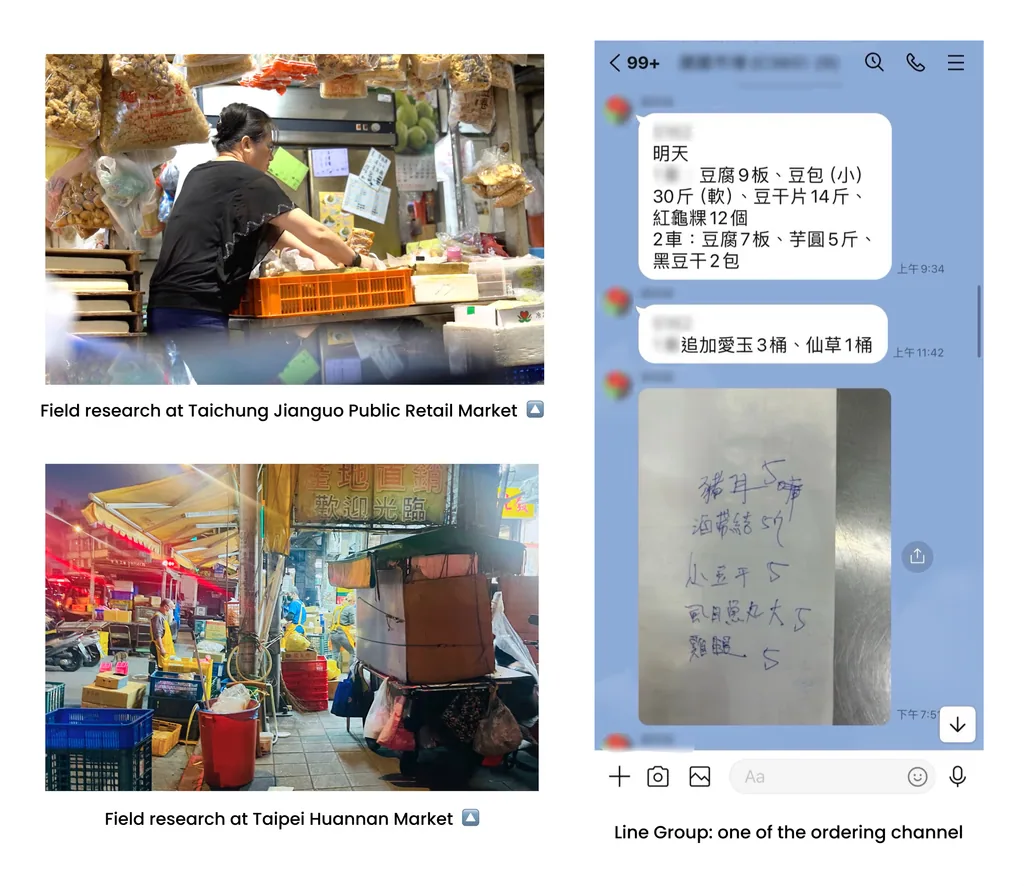
Handwritten notes and LINE messages are deeply embedded in daily workflow.
Tech anxiety and resistance to change — new tools must feel familiar, not foreign.
Orders repeat with regularity — creating clear automation opportunities.
Complex negotiation and relationship dynamics affect how orders are placed and priced.
Mapped a vendor's full working day to see where the order-management pain points cluster — from opening routine through closing bookkeeping.
Organize orders for the next day and arrange deliveries.
Review inventory and place orders as needed.
Deliver goods to customers.
Manage transactions with walk-in customers or those picking up items on-site.
Daily income is usually recorded by hand; more digitised vendors write it down, then re-enter it into Excel.
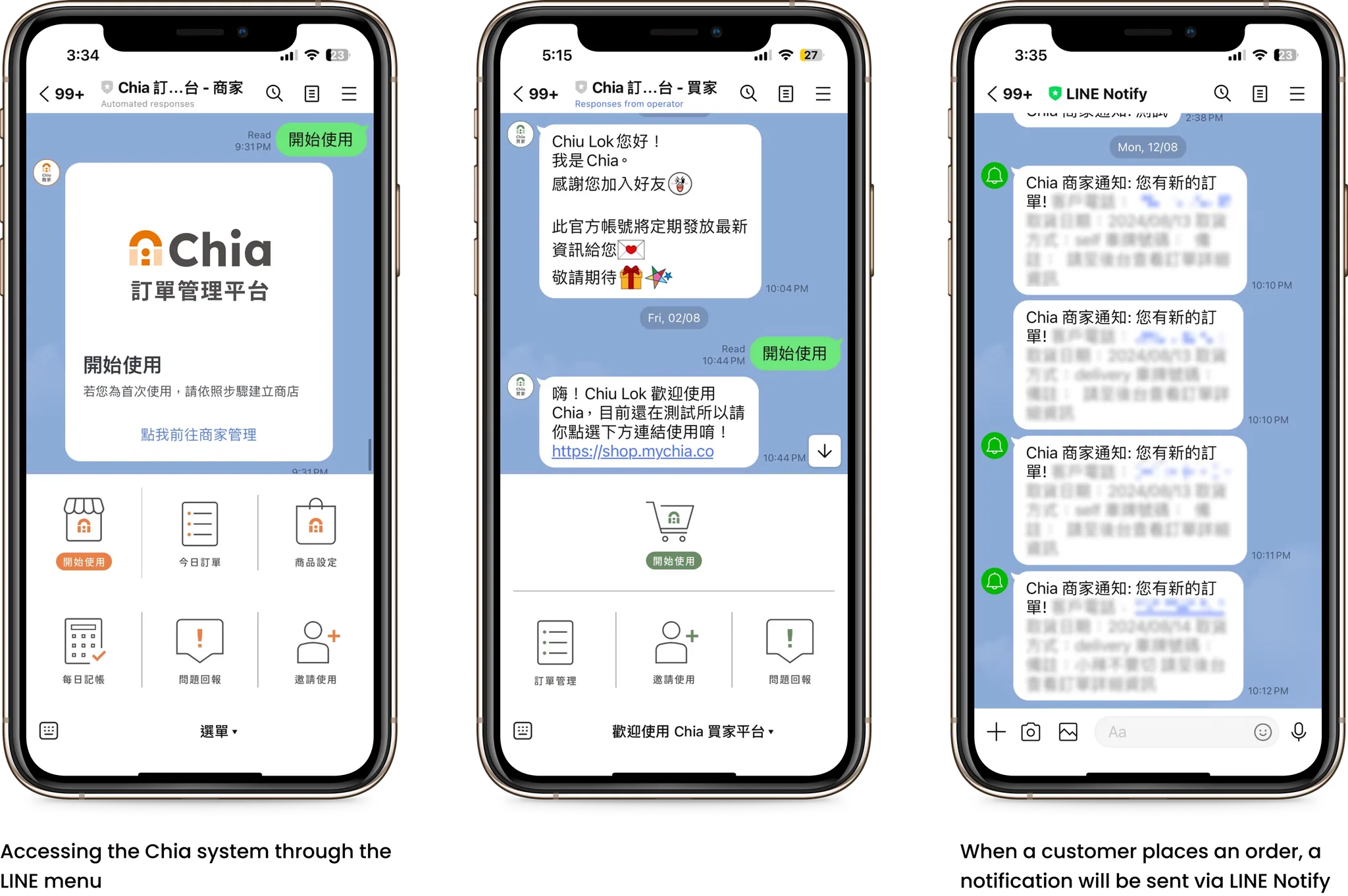
Field research translated into a clean two-sided architecture — customers place orders through Chia, vendors receive them automatically, and notifications close the loop on both sides.
Help traditional vendors consolidate and manage orders from multiple sources to streamline daily operations — with minimal disruption to existing habits?
Accessible for low-tech and older users.
Optimised for vendors and sales reps on the go.
Minimise training by aligning with existing habits.
Using LINE as a familiar entry point to reduce friction — leveraging users' existing habits and making Chia easier to navigate and adopt. No training needed to start placing orders.
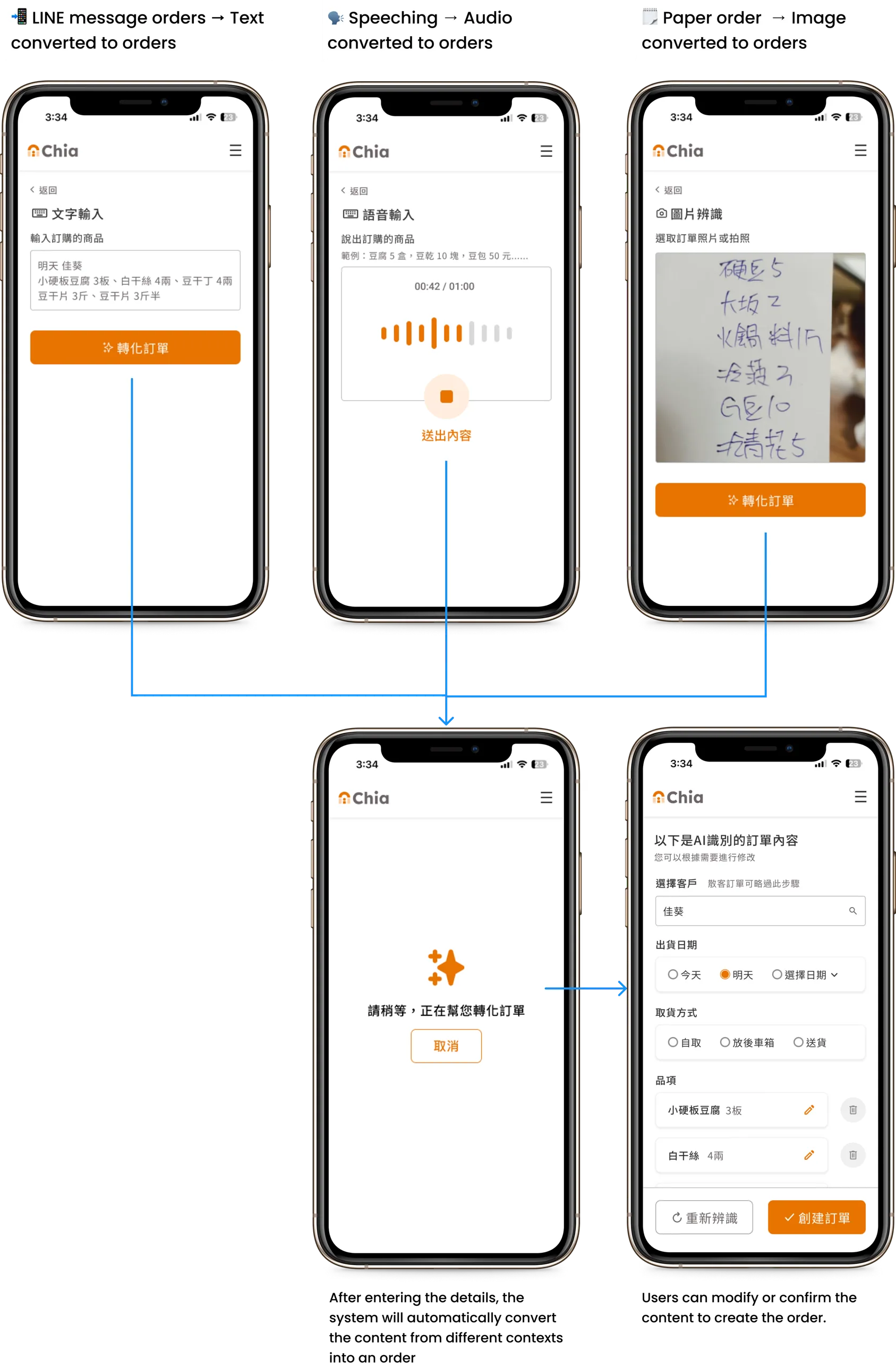
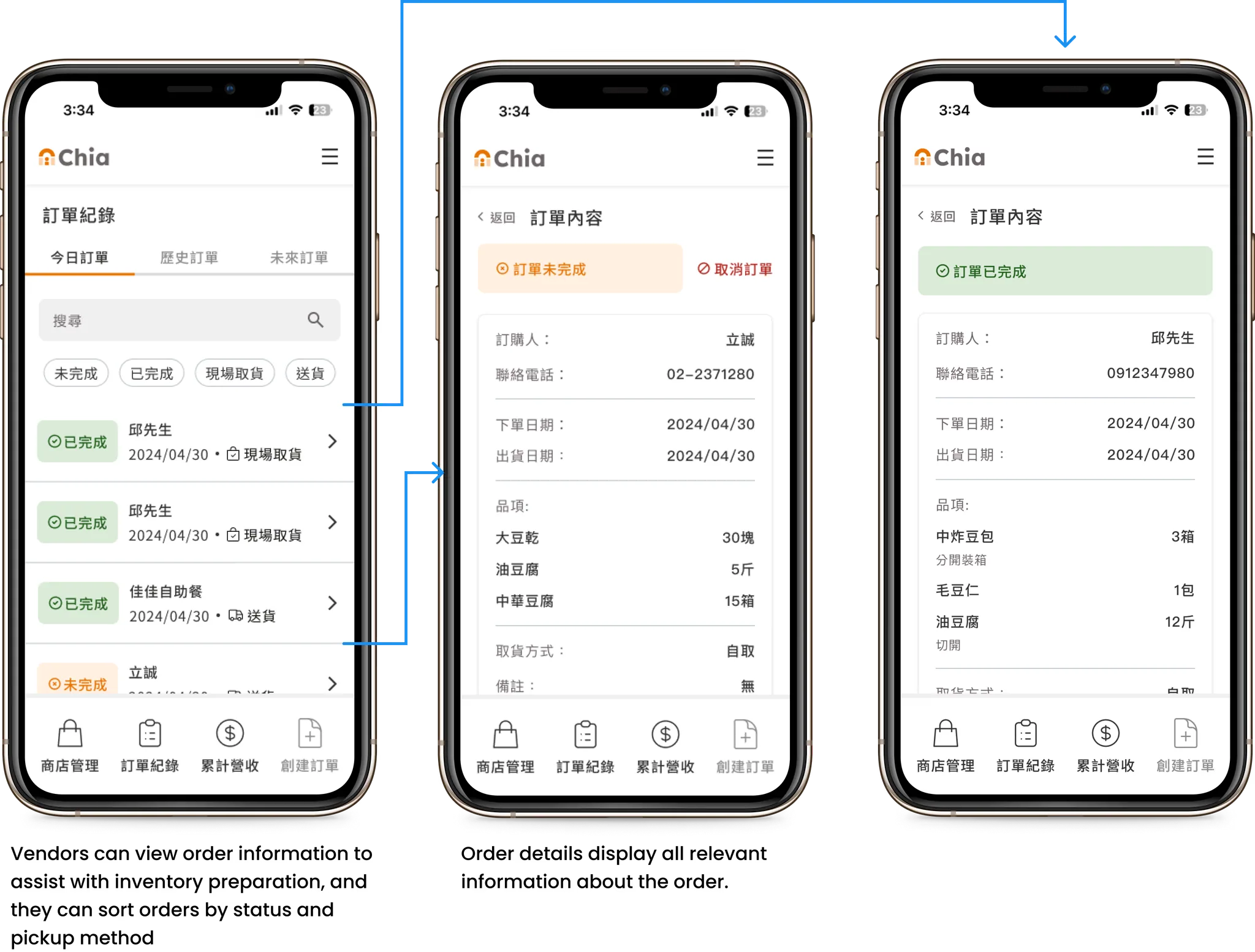
Vendors create orders by typing, speaking, or photographing a handwritten note — the AI parses all three formats into structured order data.
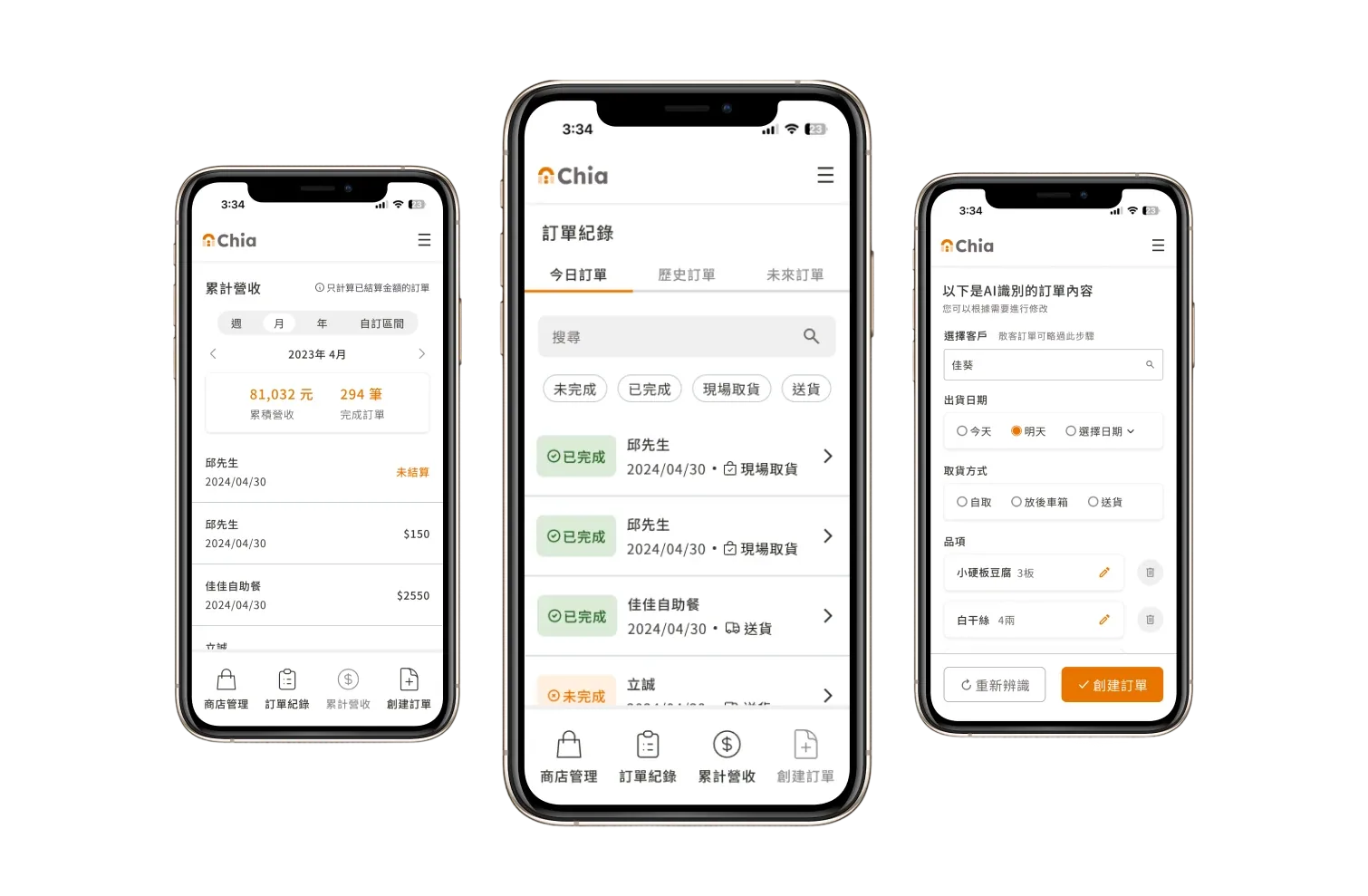
A single view of all incoming orders — regardless of how they were placed. Real-time tracking eliminates the confusion and manual reconciliation of juggling LINE, paper, and phone channels.
Designed 6 key tasks to evaluate core user flows. Used the System Usability Scale (SUS) to assess usability, and the Expectation Rating Scale to measure satisfaction. 7 target users participated in the study.
Structured onboarding to reduce dropout rates and help users integrate effectively.
Resource for B2B customers — reducing reliance on support staff.
Chia's centralised model is transferable — validated by expansion into medical supply wholesale.
Chia's order management model wasn't specific to traditional markets — the same fragmented workflow existed in other industries. Partnered with the sales team to identify and onboard new verticals.
| Old workflow | Using Chia | Benefit | |
|---|---|---|---|
| Sales | Reps visit hospitals, take orders via LINE group chats — all reps see the same messages. | Each sales rep places orders directly in Chia — sees only their own records. | Clear data separation |
| Admin | Admin manually compiles orders into Excel — high error rate, no real-time visibility. | HQ automatically receives and consolidates orders with real-time performance monitoring. | Real-time visibility |
In a startup environment, flexibility is both a constraint and an opportunity. With a small team and limited resources, every design decision had to ship quickly and prove value fast.
The traditional market context taught me that the best design isn't always the most sophisticated — it's the one that fits seamlessly into how people already work. Meeting vendors on LINE, rather than asking them to change, was the insight that made everything else possible.